


A bite to eat and a place to sleep
Who are these people?
Many hostels around the world look for people who are willing to work in exchange for accommodation, some through websites such as Workaway.info, some on their own webpages.
The worker commits to a certain amount of working hours per week. The employers, on their part, provide at least accommodation; depending on the place, they provide at least some meals and sometimes extra stuff like language lessons.
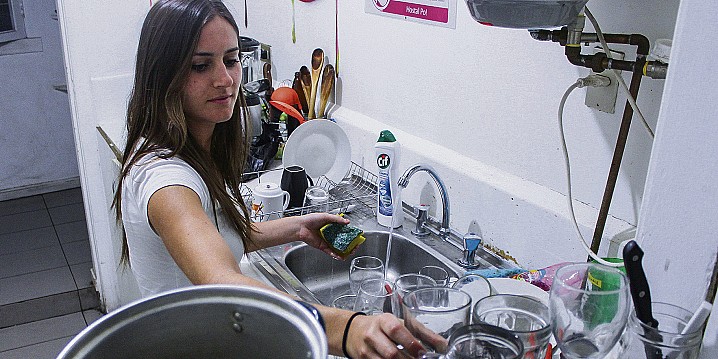
Victoria Webb from Northern England came to South America to do an internship as a part of her studies. Before starting the internship, she decided to try volunteering at a popular Chilean hostel through her friend’s recommendation.
There was no job interview whatsoever. Nobody asked her about her language skills, her previous work experience, or her criminal record.
Webb herself asked about the type of work she’d be doing and how much she’d be expected to work. In exchange for five five- to six-hour shifts a week she was promised breakfast and a bed in a shared room. She agreed to work for a month.
Webb admits that back home in the UK she would never agree to a deal like that. In addition to a wage, she would expect more responsibility, for instance. As a volunteer employee, Webb doesn’t feel like she is personally responsible for pretty much anything.
“If the customers start complaining about the lack of sockets, for example, I usually just tell them that as a volunteer, I can’t do anything about that.”
When she started working, Webb learned what she needed to know by asking questions. She was given some instructions in the beginning, but mostly the learning happened on the go. Her guess is that the hostel doesn’t give much thought to liability issues.
“I don’t even know where the hospital is. I do know first-aid, but my boss and I never had that conversation.”
Webb admits that at times the way the things are handled feels a bit unprofessional. Most hostel guests are understanding, but there are some demanding people at times as well.
“Sometimes people have weird expectations of hostels. If they want hotel-level accommodation, they should go to a hotel,” Webb says.
Even though the orientation has been non-existent, Webb doesn’t feel used. All the promises have been kept and expectations met: her Spanish has become more fluent than before and her social skills have improved. There’s no room for privacy, because in a hostel she’s surrounded by people all the time. Spending so much time with customers has taught her to interact in big groups of people and even take the lead if need be.
Webb could imagine being a workawayer again in the future.
“Workaway is a good and safe way to stay put in one destination for longer than you would just as a traveller. At the same time you can get to know the people and the area.”